South Korea's Gwangju chip hub faces looming water crunch as experts push underground storage and AI management
South Korea's Gwangju chip hub tackles water scarcity with AI optimization.
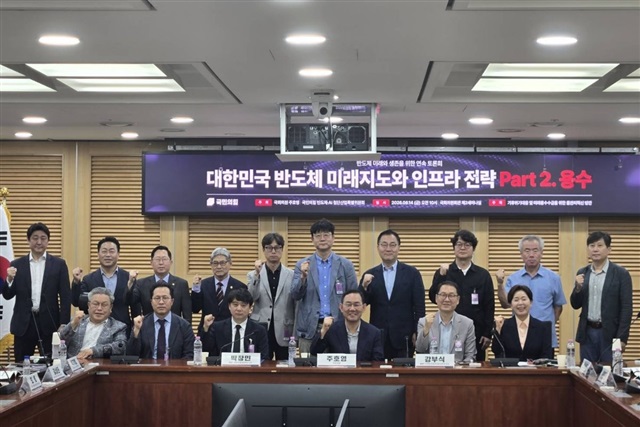
“Samsung Electronics and SK Hynix are preparing to invest in four memory fabs in southwestern South Korea, but alongside power infrastructure, the semiconductor industry's uninterrupted…”
Why it matters
Weekly Silicon's editorial model scored this 2.55/10 overall, reading it above all as a chipmaking story — news about how and where silicon actually gets made. Its strongest dimension is economic impact at 4/10 — meaningful consequences for capital, capacity, or competition across the industry — with job impact close behind at 3/10, pointing to real workforce implications — hiring, layoffs, or shifts in where the work gets done. The impact is global rather than tied to one US hub, so the thing to watch is how it filters into domestic supply chains and hiring.
Derived from the AI score breakdown below.
AI score breakdown
A composite of 2.55/10 put this story at #19 for Wednesday, August 19, 2026, driven mostly by economic impact (4/10) and job impact (3/10).
Composite is the weighted sum of the five dimensions. How scoring works →
Related stories
- How agentic AI and 'AI physics' are reshaping chip design · 2026-09-05
- Silicon Labs Opens New Austin Innovation Center with Support from Texas CHIPS Act · 2026-09-05
- GlobalWafers outlines US expansion plans at SEMICON Taiwan, eyes $7.5B total investment · 2026-09-02
- Tesla advances Austin chip facility as Musk's Texas Terafab takes shape - Austin American-Statesman · 2026-09-01
- SK Hynix to start AI chip output in Indiana in 2029, sees memory shortage through 2030 · 2026-08-30