← Today's ranking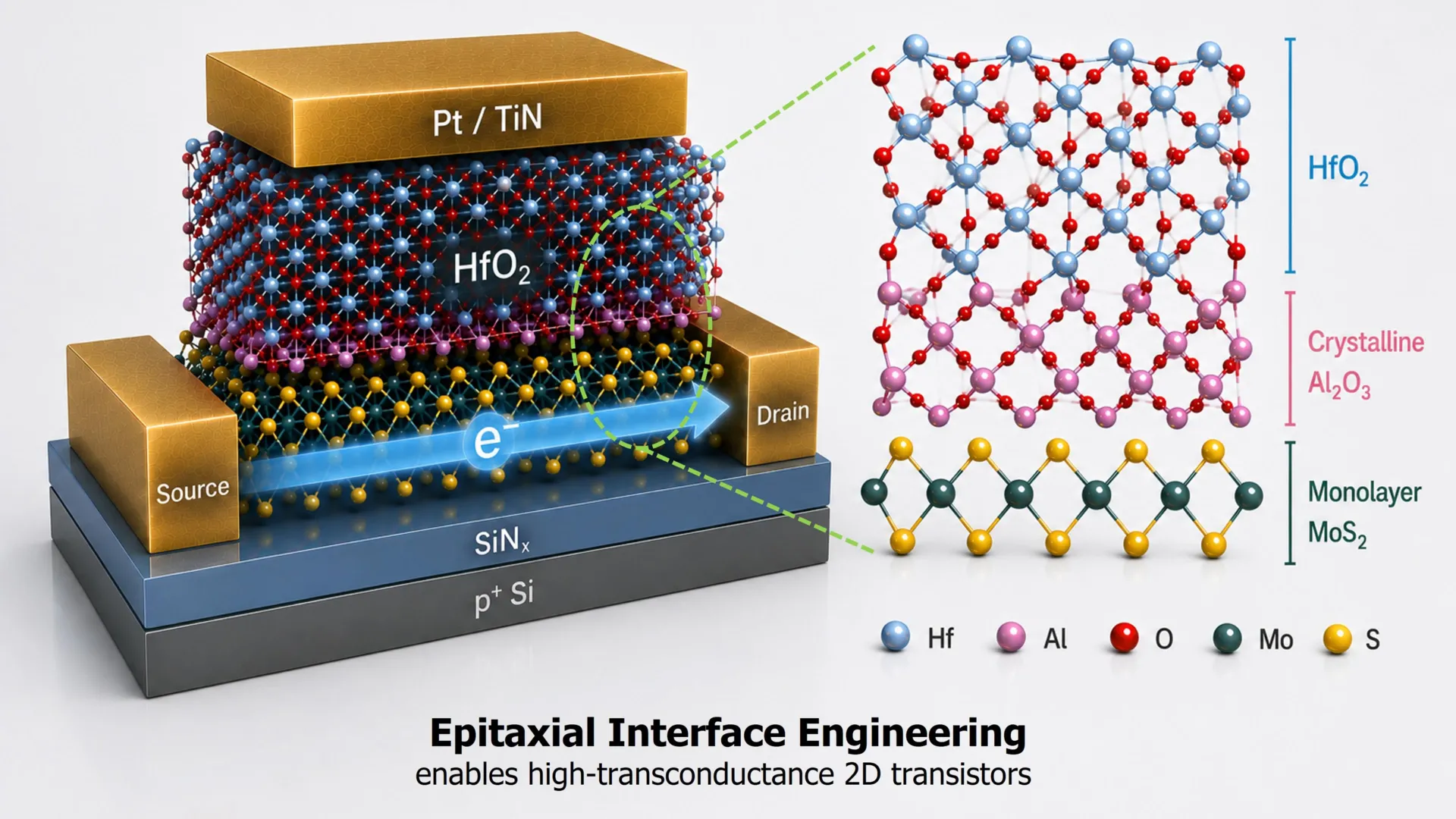
A 0.42-nanometer breakthrough could push transistors beyond silicon
Researchers achieve 0.42-nanometer breakthrough enabling atomically thin semiconductor transistors.
“Atomically thin semiconductors could enable dramatically smaller and more efficient chips, but a stubborn problem at the boundary between materials has limited their performance. Researchers…”
Why it matters
Sub-nanometer material research addressing interface defects removes a key barrier to beyond-silicon transistors, affecting long-term fab planning and material supplier strategy. Companies betting on current silicon roadmaps should track which atomically thin materials move from lab to pilot production.
AI score breakdown
#4 that day4.25/ 10
A composite of 4.25/10 put this story at #4 for Monday, August 10, 2026, driven mostly by technology breakthrough (7/10) and economic impact (5/10).
Technology breakthrough · weight 30%7/10
Economic impact · weight 25%5/10
Job impact · weight 20%1/10
Regional relevance · weight 15%4/10
Policy & geopolitics · weight 10%1/10
Composite is the weighted sum of the five dimensions. How scoring works →
Related stories
- How agentic AI and 'AI physics' are reshaping chip design · 2026-09-05
- Silicon Labs Opens New Austin Innovation Center with Support from Texas CHIPS Act · 2026-09-05
- GlobalWafers outlines US expansion plans at SEMICON Taiwan, eyes $7.5B total investment · 2026-09-02
- Tesla advances Austin chip facility as Musk's Texas Terafab takes shape - Austin American-Statesman · 2026-09-01
- SK Hynix to start AI chip output in Indiana in 2029, sees memory shortage through 2030 · 2026-08-30